
Sixty seconds. That is all it takes for someone scrolling on their phone in a Tokyo subway carriage, a London office or a São Paulo café to decide they want to go to Bali. Sixty seconds of turquoise water, sacred stone and jungle canopy seen from above, and a destination stops being a pin on a map. It becomes a feeling. A plan. A flight booked before the video has even finished looping. This is aerial drone video tourism marketing in action.
In This Article
What the viewer never sees is everything that happened before that minute existed. They do not see the permit applications filed weeks in advance, the pre-dawn calls to check wind speed, the ground team scouting a location two days ahead of the flight, or the hours of raw footage discarded for the handful of seconds that actually mattered. They do not see the colour-grading sessions, the licensing negotiations for a single piece of music, or the analysis of exactly which hour of which day a target audience is most likely to be scrolling.
At Euro News Agency, we have produced aerial drone content for some of the most recognisable names in global tourism and hospitality, from the Bali Government Tourism Office to MSC Cruises and Princess Cruises. This is the story of how sixty seconds of drone footage is built, why it has become the single most powerful tool in modern destination marketing, and why the world’s top tourism boards are now betting their content budgets on it.
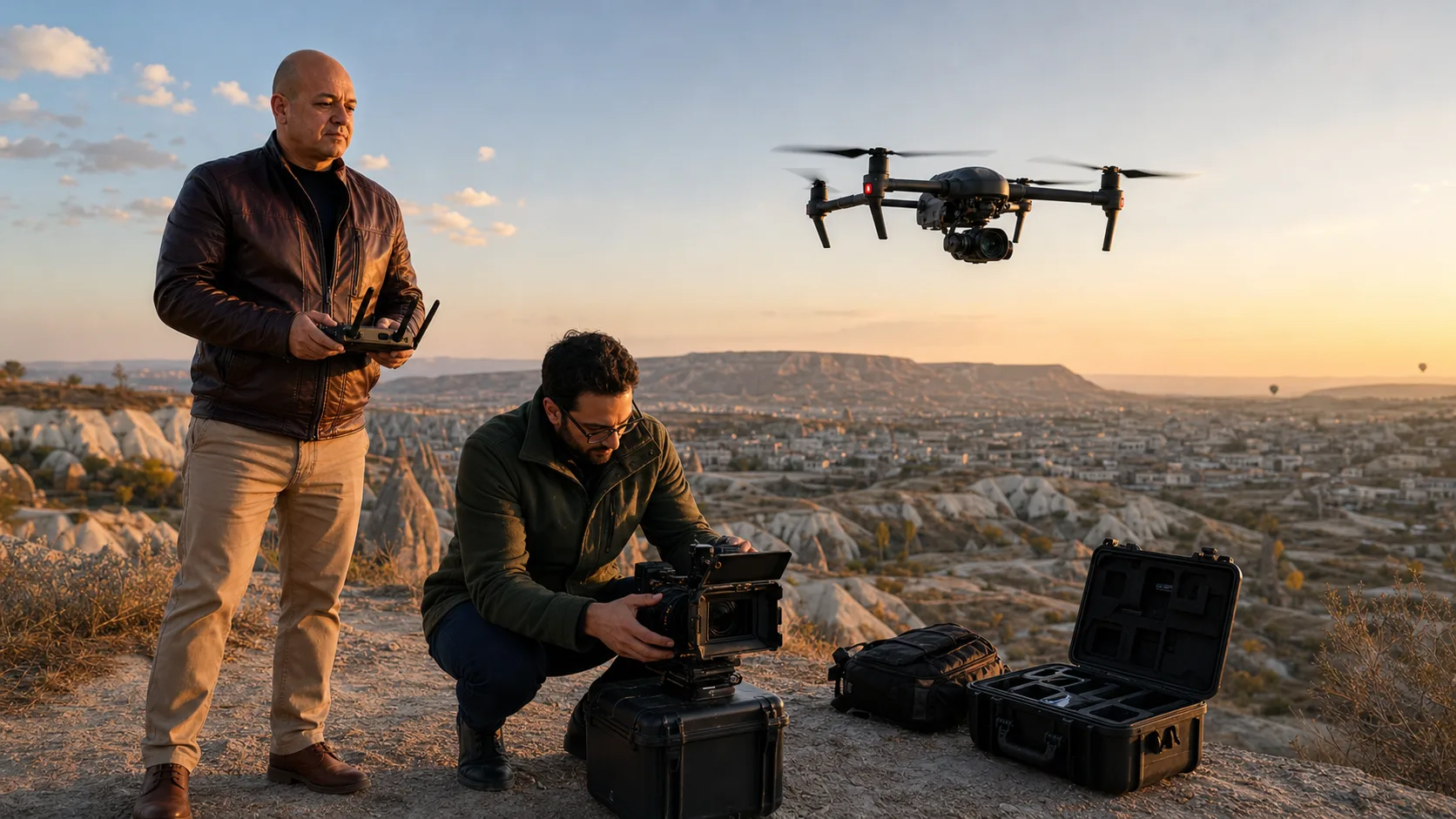
Aerial Drone Video Tourism Marketing: The Camera That Changed Everything
For most of the history of travel marketing, an aerial shot meant a helicopter, a six-figure budget and a production schedule reserved for national campaigns or Hollywood productions. Aerial perspective was a luxury reserved for the few. Consumer and prosumer drone technology changed that equation entirely. By the mid-2010s, a camera capable of capturing broadcast-quality footage could be flown by a two or three-person crew for a fraction of the cost of a single helicopter day. Aerial storytelling, once the preserve of blockbuster budgets, became accessible to tourism boards, hotel groups and cruise lines of almost any size.
The timing could not have been more fortunate. Instagram introduced Reels in 2020, YouTube launched Shorts in 2021, and TikTok, having launched globally in 2018, was already reshaping how audiences discovered travel content. Short-form video arrived at precisely the moment drone cinematography matured, and the two forces combined into something new: cinematic, algorithm-friendly travel storytelling that could be produced quickly and distributed everywhere.
The data supports what most marketers now feel instinctively. Short-form video consistently generates significantly higher engagement than static images across travel platforms, and industry analysis of destination content suggests drone footage can achieve markedly higher completion rates than ground-level video. Because most platform algorithms reward completion rate above almost any other signal, footage that holds attention to the final frame earns disproportionate reach. Tourism boards that treated video as an afterthought in 2018 are, in 2026, allocating the majority of their content budgets to it.
The Invisible Work: What 60 Seconds of Drone Footage Really Costs in Time, Skill and Craft
Pre-Production
Before a single rotor turns, a production begins with research. Our teams study a destination’s visual narrative: which angles have already been overused, which perspectives remain undiscovered, and which story a sixty-second film needs to tell. In markets such as Indonesia, Italy or the United Kingdom, this research runs alongside the unglamorous but essential work of aviation compliance — securing permits from bodies such as Indonesia’s DGCA, Italy’s ENAC or the UK’s CAA, each with its own airspace restrictions, altitude ceilings and paperwork. Weather windows are analysed days in advance, golden hour and blue hour slots are scheduled to the minute, and locations are often scouted in person up to forty-eight hours before a flight takes place. Above all, pre-production is where a client brief becomes an emotional blueprint: what should a viewer feel at second zero, at second thirty, at second sixty?
Production
Filming rarely happens in a single session. Dawn, dusk and midday light each tell a different story, and the strongest sequences are often composites gathered across several flight sessions and several days. Aerial footage is anchored with ground-level B-roll, so a viewer’s eye has somewhere to land before it lifts into the sky. Meanwhile, the crew manages everything the algorithm never sees: shifting wind speeds, temporary airspace restrictions, crowds that wander into frame, and permit enforcement that can end a shoot mid-flight. Professional-grade drones with broadcast camera sensors matter here, not for technical bragging rights, but because platforms increasingly display content in high resolution, and inferior footage is punished by both audiences and algorithms alike.
Post-Production
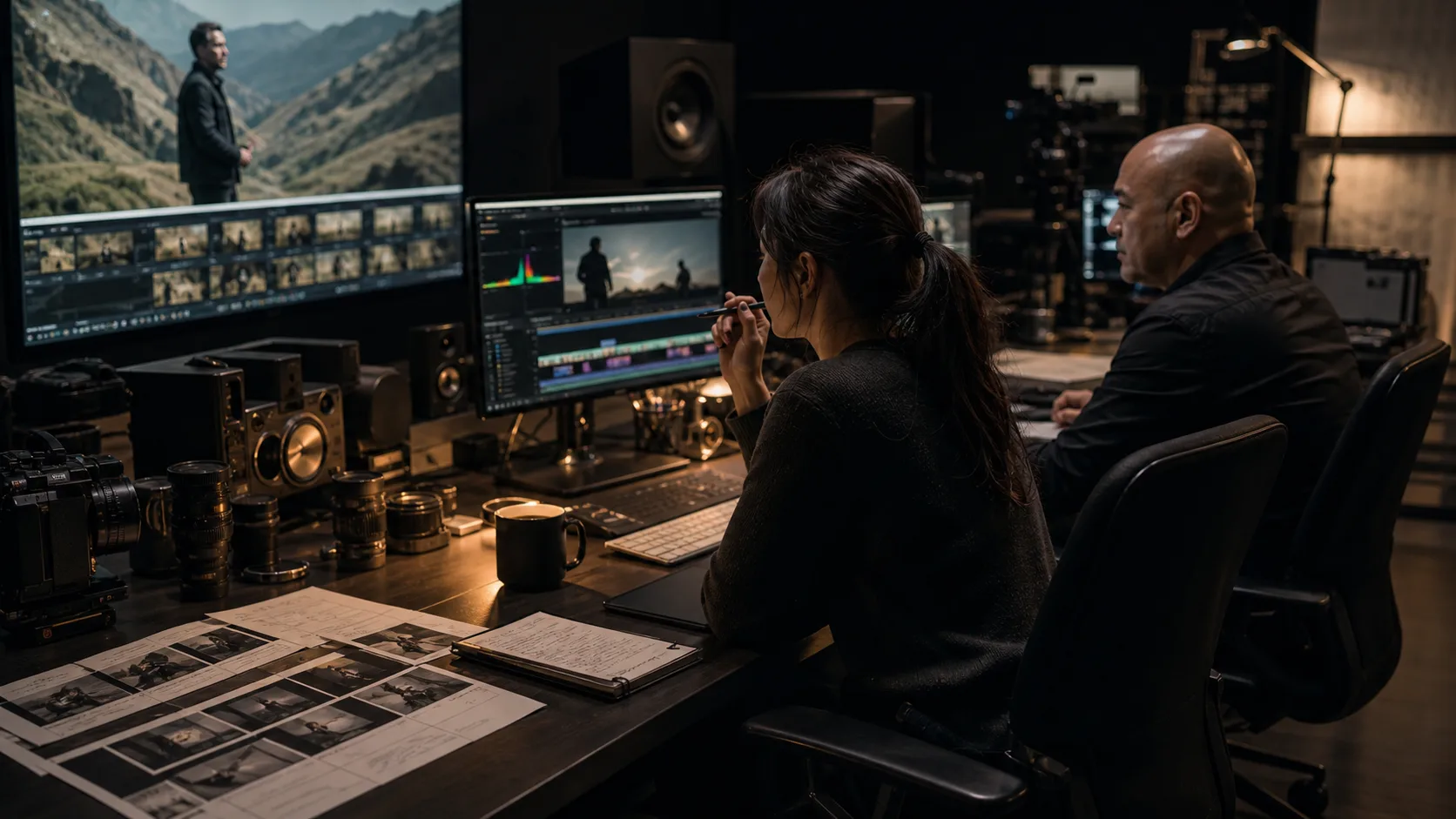
For every sixty seconds a viewer sees, our editors typically review several hours of raw footage in search of the handful of shots that justify the entire shoot. Colour grading is platform-specific: HDR treatments for YouTube, punchier contrast for TikTok, warmer tones for Instagram. Sound design and music licensing bring their own complexity, since every platform enforces its own copyright clearance rules, and a track cleared for one channel may be flagged on another. Each film is then exported in multiple formats: vertical 9:16 for TikTok and Reels, widescreen 16:9 for YouTube, and often a square 1:1 crop for the Instagram grid.
Distribution
The work does not end at export. Captions are written platform by platform, with keyword-first phrasing for TikTok’s search function and carefully researched hashtags rather than exhaustive lists. Upload timing is set against the target audience’s time zone, not the production team’s. Content is sequenced across platforms rather than released all at once, and performance is tracked closely through the first critical forty-eight hours, with engagement managed in real time.
The sixty seconds you watch represent an average of ninety-six hours of professional work. That is the real unit of measurement in aerial travel content.
| Phase | Key Activities | Time Required |
|---|---|---|
| Pre-Production | Location scouting, permits, weather analysis, client brief, visual narrative planning | 1–3 days |
| Production | Multiple flight sessions (dawn/dusk/midday), ground B-roll, airspace management | 1–2 days |
| Post-Production | Footage review, colour grading, sound design, music licensing, multi-format export | 2–3 days |
| Distribution | Platform captions, hashtag strategy, upload scheduling, 48h performance monitoring | Ongoing |
| Total | Average professional production cycle | 4–7 days → 60 seconds |
Bali from Above: When the Bali Government Tourism Office Chose Drone Storytelling
Few destinations carry the visual weight of Bali, and few clients understand the power of perspective as clearly as the Bali Government Tourism Office. When they commissioned Euro News Agency to produce aerial content across the island, the brief was simple in ambition and demanding in execution: show Bali as it had never been shown before.
Garuda Wisnu Kencana: The 121-Metre Giant Seen for the First Time from Its Own Perspective
At GWK Cultural Park in Ungasan, South Bali, stands the Garuda Wisnu Kencana statue: 121 metres tall, among the tallest statues on Earth, completed in 2018 and depicting the Hindu god Vishnu riding the mythical eagle Garuda. Filming a monument of this scale from the ground is straightforward; filming it in a way that conveys its true magnitude is not. Our answer was to fly above it. The drone let us capture GWK level with its crown, circling the full bronze form against the horizon of the Indian Ocean — perspectives no ground-based camera could achieve. That aerial sequence went on to become the most-shared frame across the entire Bali Tourism campaign.
Alas Harum: Rice Terraces, Swings and the Shot That Made the Algorithm Stop
Inland, near Ubud in the Tegallalang area, Alas Harum Bali offered a different kind of challenge. The site is known for its rice terrace landscape, its iconic sky swings suspended above the jungle canopy, and its cultural performances — all photogenic from the ground, but transformed entirely from altitude, where the geometric patterns of the subak irrigation system reveal themselves in full. Our signature shot began close on a swing occupant and pulled back in a single arc to reveal the entire terraced valley: a handful of seconds engineered to stop a scroll dead. The Bali Government Tourism Office subsequently used this sequence as hero content across every platform in its campaign.
Bali is among the most photographed destinations on Earth. Drone video did not make it more photogenic. It made it newly visible.
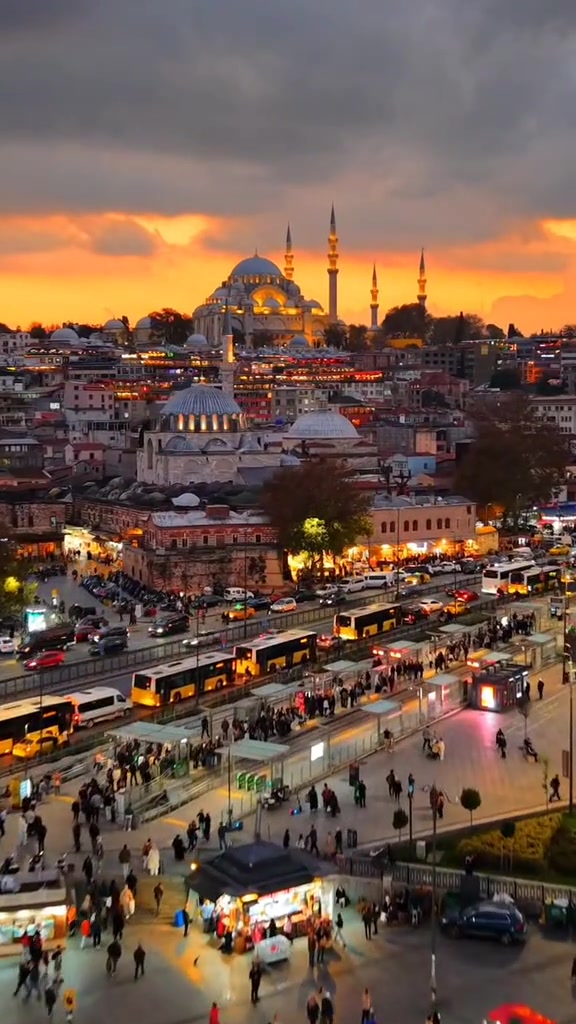
The Open Sea Reframed: Aerial Drone Content for MSC Cruises and Sun Princess
Cruise ships present a paradox for marketers: they are among the largest vessels ever built, yet almost impossible to film in a way that communicates what it feels like to be aboard one. Traditional cruise marketing has long relied on polished television commercials, static deck photography and stock images of couples at breakfast buffets. Drone technology solved a problem the industry had lived with for decades: for the first time, the full scale of a ship can be shown in motion — departing port, cutting through open water, anchored beside a Mediterranean island — inside a single sixty-second reel.
MSC Cruises
MSC Cruises is the world’s third-largest cruise line, operating more than twenty-two ships across the Mediterranean, the Caribbean, Northern Europe and beyond. Our mission was to capture the emotional scale of the brand: the ship not as transport, but as destination in its own right. Key sequences included an aerial tracking shot of a vessel departing port, a high-altitude wide shot showing the ship’s scale against open ocean, and arrival footage at a Mediterranean port of call. The finished reel distilled MSC’s entire value proposition — scale, elegance and global reach — into a single, shareable film.
Sun Princess
Sun Princess, part of the Princess Cruises fleet, is the newest vessel in its lineup and the first ship in the Sphere class, at 175,500 gross tons. Capturing a vessel of this size in full frame demanded significant altitude and distance, along with close coordination with the ship’s operations team to secure the right timing. The result was footage showing Sun Princess from angles no passenger, and no previous camera, had ever captured — coverage that reached travel media and, by most measures, delivered more earned media value than a standard press release.
Watch: Euro News Agency Aerial Portfolio
DRONE REPORT
The Garuda Wisnu Kencana statue rises 121 metres above Ungasan, South Bali — one of the tallest statues on Earth, depicting the Hindu god Vishnu astride the mythical Garuda eagle. Ground cameras cannot convey its true scale. This aerial sequence, commissioned by the Bali Government Tourism Office, was filmed above the statue’s crown against the Indian Ocean horizon and became the most-shared frame of the entire campaign.
TRAVEL REEL
Alas Harum Bali sits in the Tegallalang area near Ubud, where the ancient subak irrigation system carves the hillside into layered geometric terraces visible only from altitude. Our signature shot pulls back from the iconic sky swing in a single unbroken arc to reveal the entire valley — a sequence of seconds engineered to stop every scroll. The Bali Government Tourism Office used it as hero content across all platforms.
CINEMATIC SHORT
MSC Cruises operates more than 22 ships across the Mediterranean, Caribbean and Northern Europe, making it the world’s third-largest cruise line. The challenge: show a vessel of this scale in motion in a way that communicates the full brand promise. Aerial tracking from port departure to open sea, the finished reel distils MSC’s identity — scale, elegance and global reach — into 60 seconds.
EDITORIAL SHORT
Sun Princess is the first vessel of the Princess Cruises Sphere class: 175,500 gross tons, the newest and largest ship in the fleet. Capturing her in full frame required significant altitude and precise coordination with ship operations for timing. The result was footage showing Sun Princess from angles no passenger had ever seen — coverage that reached international travel media and delivered more earned value than any press release.
DRONE REPORT
Ancient temples and sacred monuments reveal a dimension invisible from the ground. This aerial documentary sequence captures the geometry of devotion — centuries of architectural intention compressed into a single overhead arc. Part of Euro News Agency’s ongoing series of documentary aerial reports across cultural heritage sites.
TRAVEL SHORT
Not every story requires altitude. Some destinations reveal themselves in a single morning ritual — the colour of fresh fruit against woven palm leaf, the quiet ceremony of a Balinese breakfast before the island wakes. This field note captures the intimate ground-level texture that drone footage cannot reach: the lived moment that makes a viewer decide to book the flight.
The Psychology of Altitude: Why Aerial Video Triggers Wanderlust Better Than Any Other Format
There is a reason aerial footage does not just show a destination but seems to sell it. Human spatial cognition responds to elevated perspective by rapidly processing scale and context — the brain reads “I want to be there” faster from above than it does from eye level, because an aerial view compresses an entire landscape into a single, comprehensible frame. Astronauts have long described the “overview effect”: a shift in perspective produced by seeing Earth from space. Aerial travel video produces a miniature version of the same phenomenon, lifting a viewer briefly out of their daily frame of reference and into something larger.
Platform algorithms amplify the effect. Completion rate remains one of the most important signals short-form platforms use to decide how widely to distribute a piece of content, and drone footage is structurally built to hold attention: continuous motion, constant reveal, never quite settling into stillness until the story is done. There is also a positioning effect that tourism boards and luxury brands have learned to exploit deliberately. Aerial perspective reads as premium. It is no coincidence that cruise lines, five-star resorts and national tourism offices increasingly choose drone content first: altitude signals value before a single word of copy is read.
TikTok, YouTube Shorts, Instagram Reels: One Video, Three Strategies
The same sixty seconds of drone footage rarely performs identically across platforms, because each one rewards a different type of attention.
| Platform | Content Strategy | Format | Best For |
|---|---|---|---|
| TikTok | Trend audio + vertical drone, keyword-first captions, 3–5 hashtags max | 9:16 vertical | Exotic destinations, first-time reveals, hidden gems |
| YouTube Shorts | SEO title + description, destination keyword in title, search-first approach | 16:9 or 9:16 | Travel planning audiences, longer decision cycles |
| Instagram Reels | Warm colour grade, feed-consistent aesthetic, aspirational framing | 9:16 vertical | Cruise lines, luxury resorts, premium destination brands |
Your Destination. Our Drone. The World’s Attention.
Every tourism board, cruise line and hospitality brand we work with arrives with the same underlying question: how do we make people feel something before they have even booked. Increasingly, the answer is altitude. A single well-crafted aerial film can achieve in sixty seconds what years of traditional advertising sometimes fail to deliver — it can make a destination feel inevitable. Our work in aerial drone video tourism marketing has taught us that altitude is not a gimmick; it is a language. We explored a similar idea in our own aerial documentary journey across the Bosphorus, and in our broader case for why destination storytelling needs slow context.
“We don’t just film destinations. We give them a perspective they have never seen before — and a story the world wants to watch.”
— Euro News Agency
| Client | Location | Content Type | Platform |
|---|---|---|---|
| Bali Government Tourism Office | Ungasan & Ubud, Bali, Indonesia | Aerial drone — GWK statue & Alas Harum terraces | TikTok, Instagram, YouTube |
| MSC Cruises | Mediterranean | Aerial ship departure & open-sea tracking | YouTube Shorts, Instagram Reels |
| Sun Princess — Princess Cruises | Pacific & Mediterranean | Sphere class vessel debut aerial footage | Travel media, Instagram, YouTube |