
Key Takeaways
- AI-powered travel personalization tailors every guest interaction to one person in real time, from language to budget.
- Real-time AI translation is the most underrated growth lever, unlocking markets that language barriers once closed off.
- Predictive personalization, dynamic pricing and AI review analysis are already lifting bookings and ratings.
- The winners use AI to remove friction, not the human warmth that makes travel memorable.
By Bourbiza Mohamed — Founder of Euro News Agency, former Quality Supervisor at Booking.com (2007–2012), travel journalist and marketing specialist.
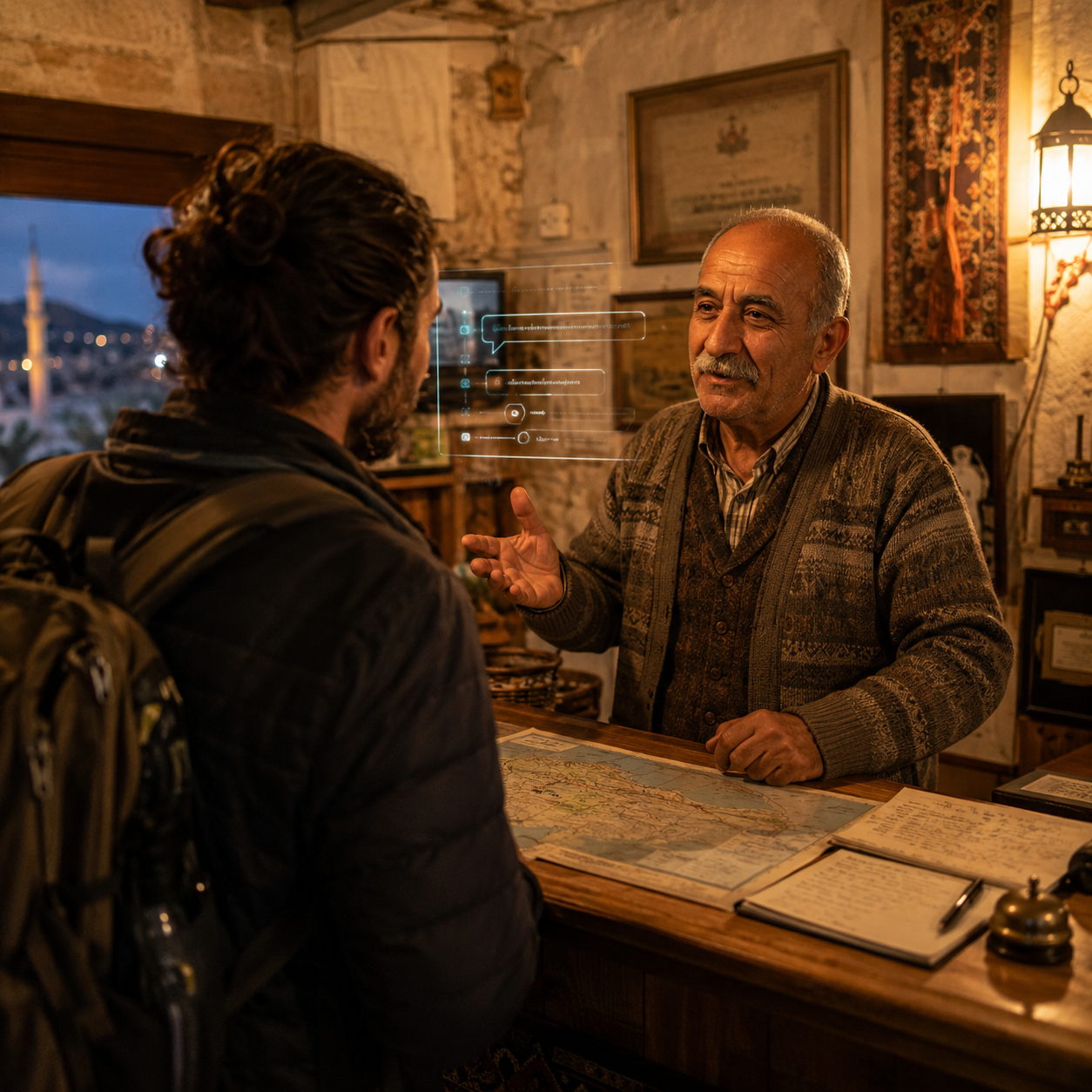
AI-powered travel personalization is the biggest shift our industry has seen since the move from paper brochures to online booking — and I learned why the hard way, at a reception desk in eastern Turkey. A small hotel, far from the usual routes. The man at the desk was one of the warmest hosts I have ever met — and we could not exchange a single useful sentence. He had only Turkish. I had everything except Turkish. So we smiled, gestured, drew shapes in the air, and lost most of what we were each trying to say.
I have lived that scene more times than I can count. A guesthouse in Iran, where the owner sketched me a map by hand. A station in Russia where I just pointed and hoped. A family place in Vietnam where the young daughter ended up translating for everyone, because school had given her a few English words and the adults had none. Lovely memories, every one of them — the kind I wrote about in my field note from Cappadocia. But underneath them sat the same nagging question, year after year: why has nobody built something that simply translates this, instantly, on the spot?
What AI-powered travel personalization actually means
Strip away the buzz and it is simple. AI-powered travel personalization is machine learning reading a traveler’s real context — their language, their history, their budget, the moment they are in — and answering in a way shaped for that one person. Not a brochure. Not a mass email. One reply, fitted to one human being.
My five years running quality at Booking.com taught me one truth that never left me. Travelers do not want more choices. They want the right one, handed to them before they have had to ask twice. We tried to do that by hand, with teams and instinct. AI now does it at a scale we could only dream about back then — and that is exactly why AI-powered travel personalization is reshaping the industry.
Language was always the real wall
Think back to that desk in Turkey. A whole town’s tourism can be quietly throttled by something as ordinary as not sharing a language. The traveler who cannot communicate spends less. Stays fewer nights. Leaves a flat review and never comes back. Multiply that by every arrival a country receives in a year, and you start to see a fortune evaporating at reception that almost nobody bothers to measure. The scale of global tourism makes this clear: international arrivals are tracked closely by bodies like UN Tourism, and the language gap touches a huge share of them.
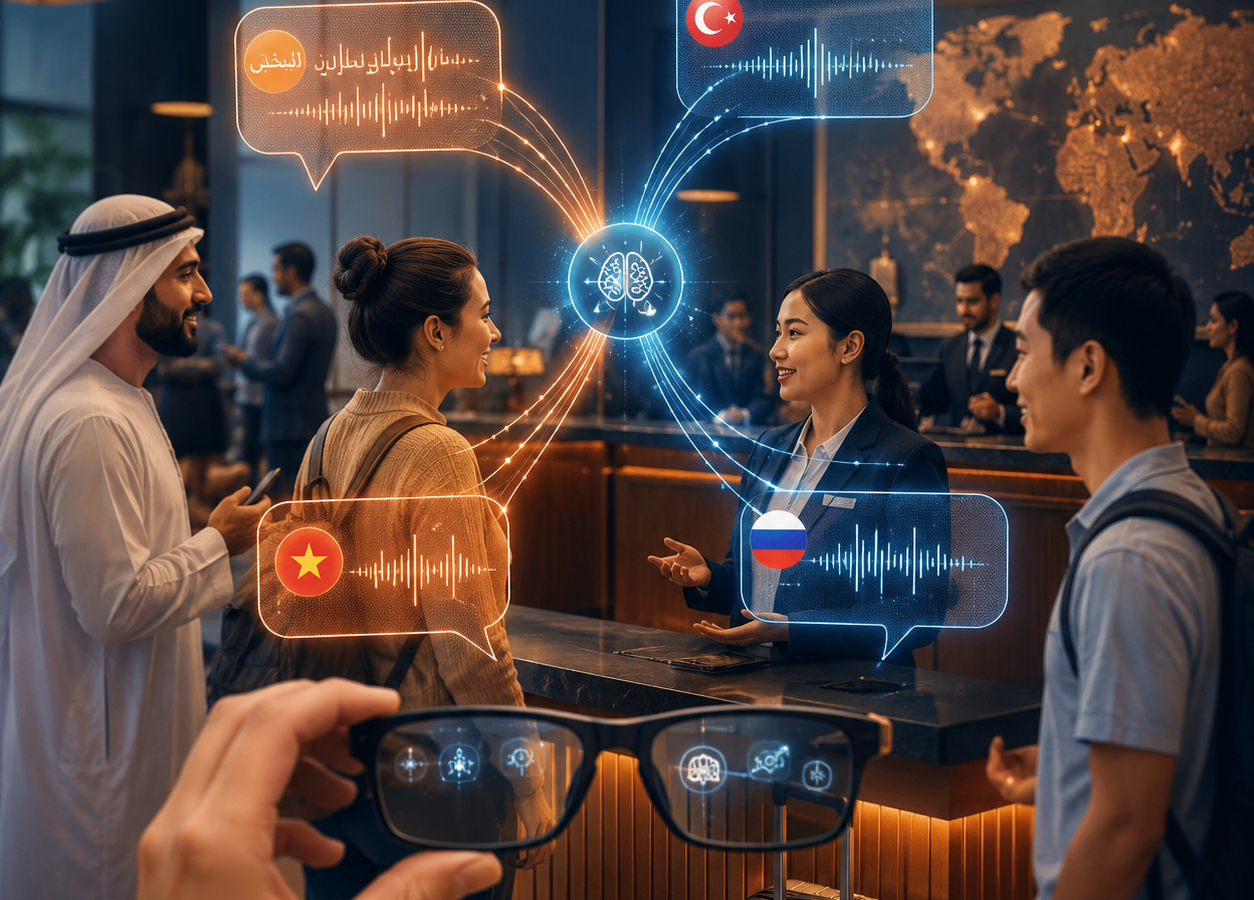
When the technology finally caught up, real-time translation was the first thing I built into my clients’ guest communication. A guest writes in Arabic. The hotel reads it in Turkish, instantly. The reply goes back in Arabic. No waiting, no fetching a child who knows a little English. The same intelligence that now lives in our phones, or in devices like the Ray-Ban Meta glasses, can sit just as easily inside a booking system or a reception tablet.
The numbers moved. One client of mine, a mid-sized hotel group, watched bookings from non-English-speaking guests grow markedly within a single season — enquiries that used to stall at the language barrier were now converting into stays. They had not hired a single translator. The wall had simply come down — a textbook case of AI-powered travel personalization unlocking markets that were closed before.
Where AI-powered travel personalization is genuinely working
I am allergic to hype, so I will only share what I have watched work. Real-time translation is the big one, and in my honest opinion the most underrated growth lever in this whole business; it opens markets that were simply shut before.
Predictive personalization comes next. The system reads what a guest browsed, when they tend to travel, and what they spent last time, then quietly surfaces the offer they are most likely to want.
There is dynamic pricing too, with rates that breathe with demand and local events instead of sitting frozen. And reputation work: an AI can read through thousands of reviews and hand an owner the one recurring complaint nobody on staff had noticed. I have watched a single insight like that turn a property’s rating around.
A warning, from someone who loves this work
Here is where I argue with my own industry. Travel is human. It always was. The risk with AI is that we automate so hard we scrub out the warmth — the very thing that made that Turkish host unforgettable even though we could not talk.
AI should remove friction, not people. The translation tool never replaced the host. It simply let his hospitality finally reach me. That is the line I hold for every client I take on. Hand the machine the repetitive, the slow, the language gap — and let your staff be more human, not less.
Where this is going
My prediction, after 107 countries and the better part of twenty years watching this space: the language barrier in tourism is about to feel like a relic, the way paper tickets do today. Travelers will speak their own language anywhere and be understood anywhere. And the hotels and destinations that take AI-powered travel personalization seriously now — not as a gimmick, but as a real bridge to the guest — will quietly take market share from everyone who hesitated.
I waited two decades for someone to fix the problem I kept hitting at those reception desks. In the end, I had to help fix it myself. If you work in this industry, my advice is short: do not wait as long as I did.
Bourbiza Mohamed is the founder of Euro News Agency. He spent five years as a Quality Supervisor at Booking.com and has traveled to 107 countries, working at the intersection of artificial intelligence, tourism and travel marketing.